

Pivoting without going in circles
It’s not the strongest of the species that survives, nor the most intelligent, but the one most responsive to change. - Charles Darwin

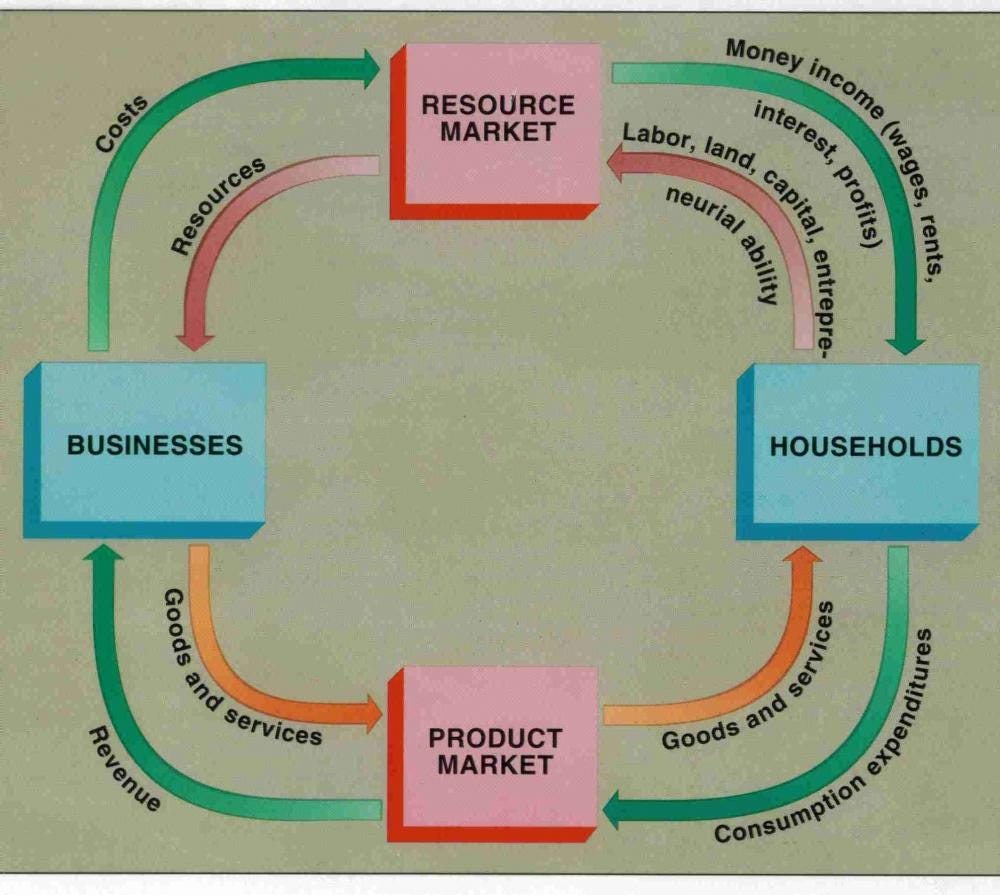
Businesses are busiest when significant changes in their operating environment must be adapted to since they impact multiple parts of the business simultaneously. Such changes typically force a selective, urgent reallocation of scarce resources, typically from investments with lower priorities than the precious few which make up the most important needs of the business. The competition for these resources introduces a strong political overtone to participants, forcing necessary pivots across a delicately woven balance achieved across multiple time horizons, between multiple interests, and across prior commitments, unraveling compromises which may no longer be relevant to the situation at hand.
The volatility of these business aspirations can be especially dynamic within competitive markets, since households are likely to reduce their consumption of resources at the same time as there is decreased demand in resource markets for labor, land, or capital. These dynamics lead to reduced revenue at the same time as other costs are going up. Under such pressures, decision-makers tend to follow their gut instincts first and then look for facts they can use to justify these decisions.
Decision-makers often have little time to react to these changes. Unfortunately, it is hard to systematically define an adequate set of rules that can be applied to all situations. These rules must work across environments where resources are abundant and those in which they are scarce.
Under conditions of scarcity, people pay a lot closer attention to how much people are using resources, and what they are using them for. This attention can lead to resentment, rather than cooperation, from resource managers. In times of scarcity, it is generally more effective to implement a rapid response system than it is to position enough resources to address each forecast demand on resources, since such anticipated peaks may only occur at the pace of 100-year flood events.
Archetypes
Trying to centralize decision-making usually does not position an endeavor well for responding to rapidly changing conditions, especially when something as drenched in meaning as 'safety' is in play. Most fliers don't even think twice about how to responsively provide adequate staffing until something goes wrong. Those affected by these dynamics are caught up in a classic system archetype that is known as the tragedy of the commons. Large batch sizes confound the flow through any production system, regardless of whether it is batch production, job production, or mass production. Like a snake eating a mouse, when the available resources cannot keep up with demand, queues inevitably form. As these batches move through the system, important feedback can be delayed. more and more people scramble for priority service.
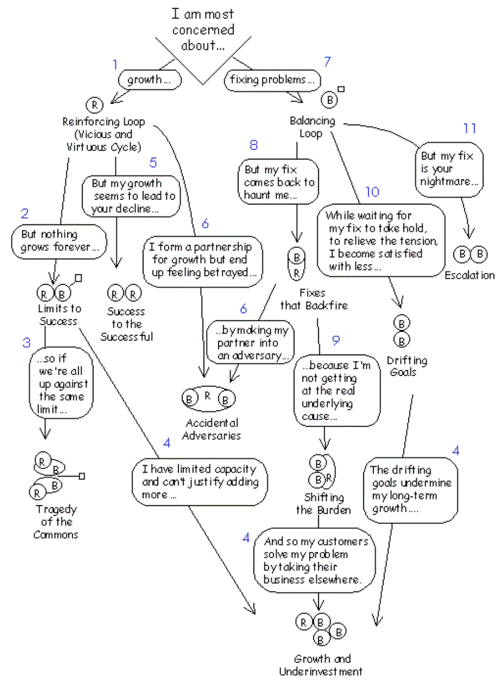
Figure 2 reveals how unfortunate consequences can result from even the best intentions. Participants do what they can to game the system. When undesirable consequences reveal themselves, bad behaviors - such as rent-seeking - are likely to be triggered. In the long run, such behaviors lead to no-win situations for the business overall, as efficiency is lowered, which in turn leads to less and less being produced. For example, adopting single criteria methods - such as selecting the highest priority endeavors across each business category - just results in everyone arguing why their work is in fact exactly that priority. This reinforces further unproductive behaviors, including stalling, misrepresentation, avoidance, and obfuscation. The next thing you know, things previously affordable become prohibitively expensive.
Keeping the powder dry
A load shedding plan can help organize team so they can quickly and deliberately offload resources. During each cycle of staffing reductions, the excess personnel must be identified for redeployment, which involves notifying all individuals exposed to such layoffs. Once such shortfalls are discovered, it is too late to develop and deploy effective prioritization schemes in the fly; any process and criteria that are sketched out is likely to be subjective, labor-intensive, and inconsistently interpreted or applied. These are exactly the kinds of situations which are susceptible to gaming by the interests being represented.
As Reinertsen sees it:
Any sub-process within product development can be viewed in economic terms. The total cost of the subprocess is composed of its cost of capacity and the delay cost associated with its cycle time. If we are blind to queues, we won't know the delay cost, and we will only be aware of the cost of capacity. Then, if we seek to minimize total cost, we will only focus on the portion we can see, the efficient use of capacity... This explains why today's product developers assume that efficiency is desirable, and that inefficiency is an undesirable form of waste. This leads them to load their processes to dangerously high levels of utilization...
The damage done by large batches can become regenerative when a large batch project starts to acquire a life of its own. It becomes a death march where all participants know they are doomed, but no one has the power to stop. After all, when upper management has been told a project will succeed for 4 years, it is very hard for anyone in middle management to stand up and reverse this forecast...
Our problems grow even bigger when a large project attains the status of the project that cannot afford to fail. Under such conditions, management will almost automatically support anything that appears to help the "golden" project. After all, they want to do everything in their power to eliminate all excuses for failure.
Have you had trouble buying a new piece of test equipment? Just show it will benefit the "golden" project and you will get approval. Have a feature that nobody would let you implement? Find a way to get it into the requirements of the "golden" project. These large projects act as magnets attracting additional cost, scope, and risk...
At the same time, large batches encourage even larger batches. For example, large test packages bundle many tests together and grow in importance with increasing size. As importance grows, such test packages get even higher priority. If engineers want their personal tests to get high priority, their best strategy is to add them to this large, high-priority test package. Of course, this then makes the package even larger and of higher priority.
Rules must work within environments of both resource abundance and scarcity. Under conditions of scarcity, everyone starts paying a lot closer attention to who is using resources, and what they are using them for. This scrutiny can produce more heat than light, especially if the baloney is sliced too thick or too thin.?
This requires sharpening your business acumen, assuring that statements of work are compatible with master agreements (assuming you have these), and verifying that work breakdown structures are understood, accepted, and supportable by performing organizations.
Western cultures are primed do such exercises from their lens of individual self-interest. Non-western cultures are more inclined to promote the collective good. Unfortunately, delays or stalling by some agents can lead us into ever more severe positions.
Enhancing accountability
A 'tear-away jersey' strategy can be adopted which discourages bad behavior and enhances accountability. The following these steps highlight how such a strategy can be implemented:
Document assumptions for the exercise
Validate assumptions have been clearly defined by asking a random selection of participants to provide feedback on how the assumptions are to be interpreted - what do those assumptions enable and what do they preclude?
Delegate decision authority to responsible parties
Suspend all efforts recently launched, investments exceeding defined thresholds, and external hiring. These tactics are necessary to have a stable baseline for subsequent prioritization.
Explain the business situation to all affected parties. Keep it short and sweet, and layout the above plan. Rumors can create unnecessary fear, and you don't need the best people jumping ship.
Provide everyone the opportunity to offer suggestions
Each group to bring forward their zero-based budget at the granularity of their existing staffing, rather than speculative staffing-up numbers.
Determine activities already underway which could or should be sacrificed or delayed
Layout a schedule for facts, data, and reviews necessary to satisfy business planning targets
Capture under-runs in each budget across the board and move into a pool for resource reallocation.
Inventory specific, written authorizations that the organization has committed to within the intermediate time horizon
Identify the constraints which must be accommodated to support these authorizations
Identify the projects necessary for continued implementation and assure that their business milestones and value propositions are well defined, and can be achieved within existing resource allocations
Determine the reductions necessary to be met as a percentage of committed business plans
Force each producing and consuming organization to rank order all projects already at least 25% complete, from the project they see as most important to the overall business to what is least important.
Scoring
According to game theory, self-organizing teams form coalitions around self-interest. These teams must tease out a viable system model that captures each situation. In a perfect Bayesian network, influence diagrams can be used to collectively characterize a set of behaviors that can pursue mutually successful outcomes. The natural interest of each resource manager is to protect their position and attempt to force others to absorb the changes.
Business leaders have an additional fiduciary responsibility to protect the business's assets, including continuing to invest in critical infrastructure. This doesn't mean going on a spending spree; the costs should be limited to what it takes to replace the original capability, not provide a nice upgrade. Such maintenance should be billed at cost and should keep the assets in working order. Investing in regulatory compliance and such maintenance should take roughly 20 percent or so of the firm's total resources, depending upon the number of assets, their condition, how often the assets need to be refreshed. and what they are required for.