

A good plan describes the strategy, approach, and jobs which will be taken to accomplish a set of objectives. A good plan should provide answers to the classic questions asked in Rudyard Kipling’s poem, Six Honest, Serving men:
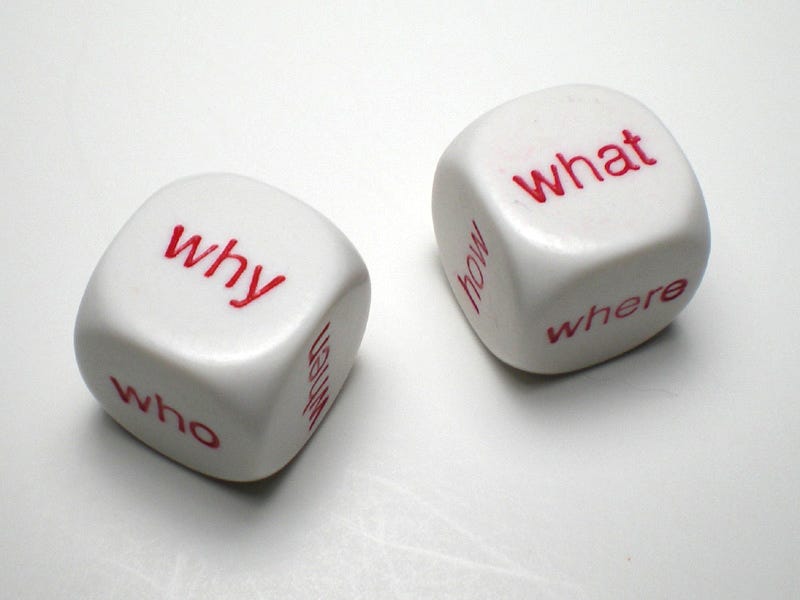
what outcomes are expected from this work?
why is this work required?
who is going to do and use the work?
when must this work be completed?
how will the work be performed?
where will this work be reviewed and reported on?
The ‘what’ question should be answered by writing down the accomplishments and completion criteria which must be satisfied when performing this work. These criteria should enable an evaluation of whether an event has been completed or not, with the determined result producing a binary choice. While activities may be represented in relative terms (like “50% complete), accomplishments are either achieved or they are not. A good plan needs a description of exactly how this doneness will be determined. A good way to do this is to document the tangible evidence that is expected to demonstrate satisfactory completion, such as the examination or evaluation of an artifact, rather than just tracking the passage of time, or the consumption of resources. Events described in this way provide the basis for assessing progress while the work is being performed.
Answers to the ‘why’ question reveal the underlying intentions for performing the work. If the team’s performance ever strays too far from the path of these intentions, a record of the underlying motives is helpful in providing a north star for reorienting the team as they consider whether to adjust their plan or their execution.
Answers to the ‘who’, ‘when’, and ‘where’ questions are typically required to divide up the work into executable chunks by performing units. For major endeavors, this partitioning is often done by defining distinct work packages that can be separately estimated and planned at lower levels. These work packages are natural subdivisions of lower-level activities that can be assigned to specific organizations for allocating responsibilities, lower-level planning, and monitoring progress during execution.
A work package is completed when all accomplishments assigned to that work package have been satisfied. To answer these three questions, the description of these work packages should record the work that is to be performed, the deadlines by which that work must be completed, and the skills and expertise required for performing that work. Once the work package is framed in this way, an estimate of resources required for this execution. and an assessment of the risks that may impede progress along the way should be developed. For example, work packages might be defined for performing a design task, developing tooling, making an initial manufacturing production run, performing a shop order, purchasing an off-the-shelf component, or any other definable collection of activities which can be assigned to another organization or a sub-unit of an internal organization.
The ‘how’ question is answered by describing the activities which will achieve these outcomes. These activities often require elaboration at different levels of detail over time, though it is unusual for all of the required details to be known before execution must begin. Since planning for complicated endeavors are required at many different levels, the associated plans and schedules are established and managed in a hierarchical fashion. When we use the adjective ’master’ with the noun ‘plan’, we are mean the top-level elements of this collection, which are the principal, driving forces, and controlling authority, for lower-level activities. In this context, the top and upper-level elements will likely be established using different methods, and will be negotiated by different parties, than lower-level plans. Detail is added, and accountability is provided, as the schedule, functional, and performance requirements are flowed down, and managed within a well-defined set of organizational interfaces. When we add the adjective ‘integrated’ to our ‘master plan’, we have an ‘integrated master plan’, which describes the details and information relationships across these multiple levels, and assures that they have been verified to be sufficiently consistent and complete for execution to begin, and refinement of planning to occur over progressively longer time horizons.
While planning can occur in people’s heads, and in conversations among team members, none of that has meaning unless it is written down and approved. An integrated master plan must be written down, reviewed, and approved. This suggests using an outline such as that provided below:
Introduction
A short description of the endeavor
A definition of the scope for the work
An analysis of the progressive flow and maturity of work products. There should be a particular focus on adopting conventions and expectations for maturity definitions such as draft, preliminary, written, submitted, accepted, and approved.
Assumptions and Ground Rules
Events, Accomplishments, and Criteria Dictionary
Events, which are the logical points at which to assess progress
Accomplishments, which are the desired results to be achieved by a specific event
Criteria, which is the evidence required to demonstrate that each accomplishment has been complete
Work packages
Organizational responsibilities for producing the work package
The primary organization responsible for negotiating additional details about the interactions between this work package and other work packages (often called the work package owner).
A narrative describing the work package activities, with a focus on the handoffs into or out of the work package:
what inputs are needed and by when
which work package those inputs are needed from
what outputs will be produced
when (relative the start of the work package) key decisions need to be made
The definition of done
The intent of this information is to lay the groundwork for producing a schedule which is tethered to a start date, i.e. weeks from launch, months from go-ahead, etc.
To avoid confusion about whether a particular named activity is located in the plan, or will instead be found in its accompanying schedule, an effective convention for naming is often adopted; this convention involves describing activities in an integrated plan using past tense verbs, since these activities describe assessment points that should have been completed when the event itself occurs. For example a key event might be described using accomplishment named ’Systems Requirements Review completed’. In contrast, present tense verbs should be used to describe activities when they are instead in the integrated master schedule (e.g., Develop Software Specification, Perform Requirements Analysis). This change in verb tense reinforces that there is a relationship between planned activities and scheduled activities and makes it easier to integrate activities and events across plans and schedules. Consistent use of such constructs helps to emphasizes these important distinctions and provides a very simple naming convention that signals where to find things.
If the definition or development of any portion of a work package has not yet been sufficiently defined to allow planning to be done, a mechanism should be adopted which captures the associated activities in a ‘parking lot’ construct. The need for this deliberate delay in detailed planning typically arises when the work is sufficiently far in the future that it is dominated by unknowns, being deliberately performed in a series of implementation phases, or if scouting explorations to discover which rainbow to follow in order to accomplish that work have not yet been accomplished. Ideally, a rough estimate of the time and resources required for accomplishing this future work can also be made, though this many not always be possible. One way of addressing uncertainty in this context is by producing an estimate with both an upper and lower bound combined with a confidence level associated with this prediction.
The collection of these ‘future planning packages’ should be time-phased in accordance with known need dates and historical rates of execution for similar endeavors. Refined planning of these future planning packages can then be accomplished once requirements and the environment become clearer, and the timeframe for performing the work draws nearer. The work required to refine the plans for these future planning packages should be incorporated as a part of the baseline integrated master plan itself, to avoid painting the team into a corner.